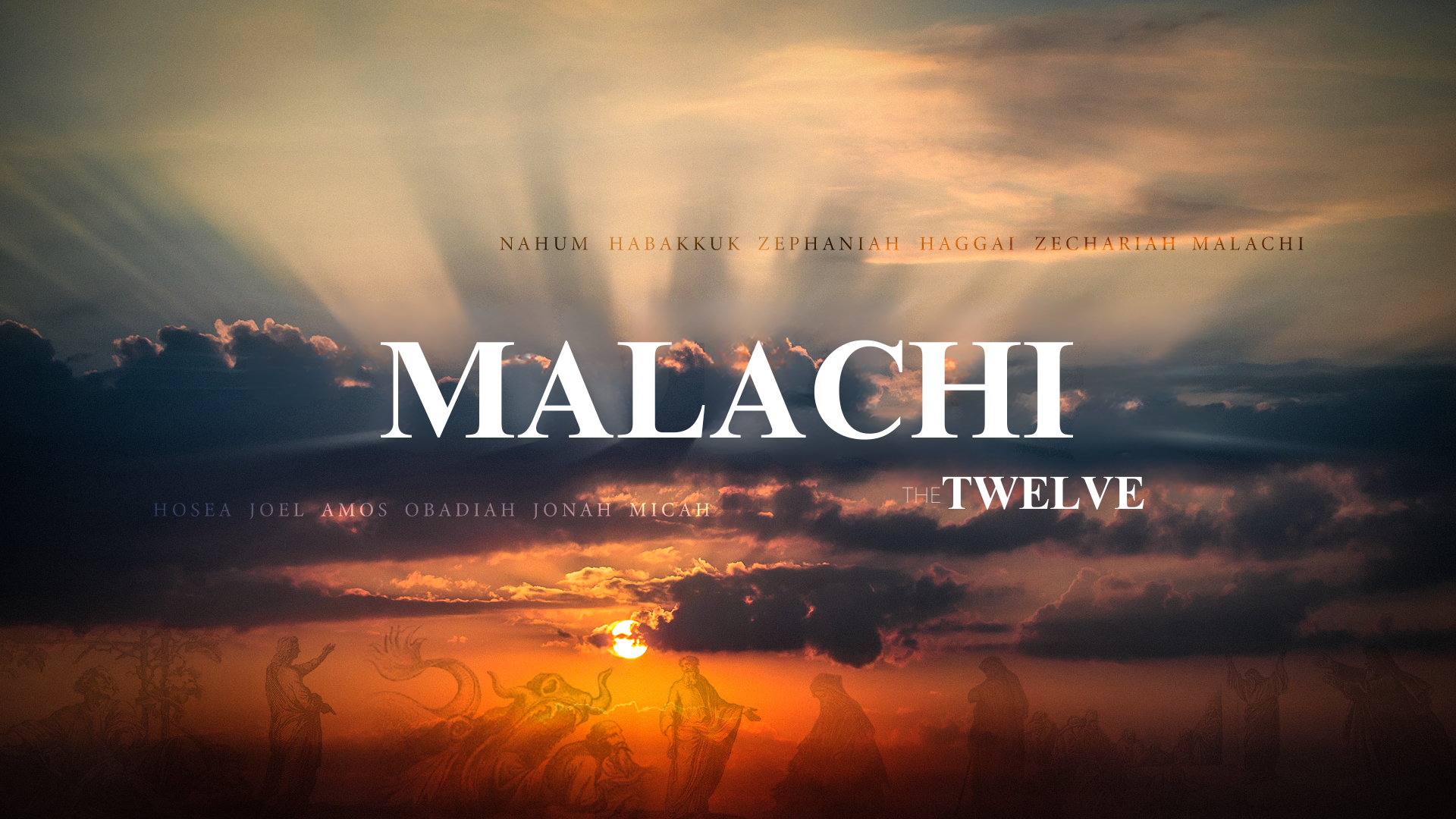
Malachi 3:13-4:6: "The End of the Beginning - God's Last Word.”

Manuscript
To review, the prophet Malachi is the author, and the date of writing is around 460 BC or so, the final book in the OT, and it marks the beginning of about 400 years of prophetic silence between Malachi and the beginning of the gospel accounts with the announcement of the birth of John the Baptist. Malachi is God’s last word of the OT prophesying God’s final word in the person of the Messiah, Jesus Christ. In this final disputation, God brings the argument to a close, depicting the differences between the righteous and the wicked in the clearest possible terms. and this final passage sets the stage for the close of the Old Testament and the beginning of the New, the difference between the age of the Law and the Prophets and the age of Mercy and Grace. I’ve titled tonight’s sermon “The End of the Beginning,” for as the last echoes of Malachi’s prophetic voice fade away, the silence anticipates the coming of the forerunner and the Messiah. The next voice to be heard will be Gabriel, then Mary, then the cry of a baby in Bethlehem.
Tonight, we will look at disputation #6 and the epilogue of the book, but first, we need to set the stage a bit. This final passage describes
two groups of people.
The first group is the wicked: proud and foolish, thoughtless and selfish, greedy and perverse.
The second group is the righteous: humble and wise, considerate and selfless, giving and gracious. When the wicked rise up in complaint against the Lord, the Lord speaks punishment over them, and he speaks unbounded joy over the righteous. God will not be mocked nor disrespected. He will once and for all distinguish between those who are his and those who are not. and the words of God the Son, the Savior and King, will ring out,
“The time is fulfilled, and the kingdom of God is at hand; repent and believe in the gospel.” (Mark 1.15). let’s begin!
Hard Words
God confronts the wicked people of Judah with their sinful complaints. Their words have indeed been hard against the Almighty God, presumptuously chastising him. hard words from harder hearts.
13 “Your words have been hard against me, says the Lord. But you say, ‘How have we spoken against you?’ 14 You have said, ‘It is vain to serve God. What is the profit of our keeping his charge or of walking as in mourning before the Lord of hosts? 15 And now we call the arrogant blessed. Evildoers not only prosper but they put God to the test and they escape.’”
The people had spoken in severe and insolent language. We might say it this way: “There’s no point in serving God; if he is even there, he certainly isn’t involved or concerned with our lives. It’s useless to spend time and money sacrificing perfectly good and valuable animals for some pointless religious ritual. Why should we continue trying to keep the law when nothing good comes from it? How does all of this rule-keeping make our lives any better? The people who never go to the Temple are wealthier and happier than those who continue this charade of religious worship. God, if he even exists, does nothing against the ones who forget about him and nothing for the ones who try to obey him. What’s the point of all this?”
It still amazes me that the people respond with disbelief at God’s statements, as if they don’t know their own attitudes or they are unwilling to own them. Did they think it was possible that the God who knew their hearts did not know their words?
The impenitent people of Judah saw only futility in worship. Why would they do that? I’ll offer one suggestion: they had lost the right perspective on their relationship to God, prompting God to give Malachi this entire prophecy as a reminder.
they had reduced heartfelt worship and honor for Jehovah God to a business, to a series of commercial transactions, a religion of traded benefits, an exchange of piety for blessing, and they felt that the return on their investment was rapidly dropping. as we would put it today, their answer to the question, “what’s in it for me?” was “nothing”.
The Jews of Malachi’s day weren’t the only ones to see God and their relationship to him this way. There have always been those who knew and loved and served the Lord and those who couldn’t have cared less about Him. From the days of Cain and Abel to today, most people have not followed God. If they thought of him at all, it ranged from a vague sense of obligation to outright hatred, rebellion, and disbelief. They have chosen themselves and the things of this world over the Lord.
And this division of people into two groups, those who served and followed the Lord and those who did not, has always
cut across all other human characteristics and identities, such as gender, age, race, wealth, status, nationality, or language. In human terms, anyone and everyone is capable of speaking hard words against God, and most do, either with their mouths or in their hearts. Jesus makes this truth clear in the Sermon on the Mount in
Matthew 7.13. 13 “For the gate is wide and the way is easy that leads to destruction, and those who enter by it are many.
But
there is another group of people in this world. those who follow a different path, who seek first the kingdom of God, who…
22 flee youthful passions and pursue righteousness, faith, love, and peace,
along with those who call on the Lord from a pure heart. (II Timothy 2.22). Sadly, according to Jesus, fewer people follow and serve him than those who follow and serve the world. again from
Matthew 7.14.
14 For the gate is narrow and the way is hard that leads to life, and those who find it are few.
And as it is true with the wicked, so it is with the righteous. Other human identities don’t matter. God chooses to redeem his people, his remnant, from
all of humanity.
Just as the rebellious come from every group and every place, so do the righteous. In
Revelation 5, we hear the song of the redeemed.
9 And they sang a new song, saying,
“Worthy are you to take the scroll
and to open its seals,
for you were slain, and
by your blood you ransomed people for God
from every tribe and language and people and nation,
10 and you have made them a kingdom and priests to our God,
and they shall reign on the earth.”
Malachi also writes of this
second group, the faithful believers.
16 Then those who feared the Lord spoke with one another. The Lord paid attention and heard them, and a book of remembrance was written before him of those who feared the Lord and esteemed his name. 17 “They shall be mine, says the Lord of hosts, in the day when I make up my treasured possession, and I will spare them as a man spares his son who serves him. 18 Then once more you shall see the distinction between the righteous and the wicked, between one who serves God and one who does not serve him.
This smaller group, this little flock, as Jesus called them in
Luke 12.32, are those who feared the Lord and
spoke with one another. A simple statement, but one with great meaning. It’s exactly what happens here at Messiah Bible, and nearly every other church in the world. believing Christians, each in their own faith walk of life, simply spending time with each other. praying, rejoicing, sharing needs and joys, crying with each other, caring for one another. This may seem ordinary and normal to all of us, but in truth, it’s very special. And the unseen partner in each conversation is the Lord himself.
The Lord paid attention and heard them. When we spend time and energy visiting with and encouraging each other, the Lord is present and knows us and hears us as each of us ministers in his name. This is everyone, not just pastors or counselors, but each individual believer. We learn from
Matthew 12.24b that.
out of the abundance of the heart the mouth speaks. . so when you’re speaking love and peace to your brother or sister, you’re speaking from the abundance of your heart filled with the Holy Spirit. God bless you for it.
And while we may question or even complain to the Lord, don’t worry, but be encouraged. Let me share with you some wisdom from Matt Harmon, a biblical commentator, on this point. “From these God-fearing people, however, such questions and complaints flow
toward God, prompted by their faith in God’s power and his love. The psalmists questioned God and complained to him precisely because they
did believe that he is the righteous and all-powerful God who controls every aspect of the universe and cares for his people. They struggled with his providence because they knew him to be a God who distinguishes between the righteous and the wicked, not because they had cynically concluded that God doesn’t see or care what is going on in this world.” Even when we
know God, maybe
because we know God, when we still have questions, that’s evidence of
belief, not
unbelief.
But even better, a book of remembrance was written before him of those who feared the Lord and esteemed his name. There is much to learn in this, for God has at least two types of books, books of divine decrees written beforehand, such as “before the foundation of the world,” in
Revelation 13.8, but also books recording events as they happen, for reward, such as here. This practice was common in the ancient Near East, and we find it mentioned in the books of Ezra and Esther. Here, the sense is that God knows his people and knows both their words and actions, and records them in order to reward them.
II Timothy 2.19 says. 19 But God's firm foundation stands, bearing this seal: “The Lord knows those who are his,”
And this record of the righteous and their words and deeds will support the decision of God to distinguish between the righteous and the wicked.
17 “They shall be mine, says the Lord of hosts, in the day when I make up my treasured possession, and I will spare them as a man spares his son who serves him. 18 Then once more you shall see the distinction between the righteous and the wicked, between one who serves God and one who does not serve him.
Those who love and serve God will be his in a special sense, a sense not shared by all people as the
creation of God, but only by those who are also the spiritual
children of God, those who are
his own. They will be part of what v 17 calls God’s “treasured possession,” a phrase repeated from
Exodus 19.3b-6a.
The Lord called to him out of the mountain, saying, “Thus you shall say to the
house of Jacob, and tell the people of Israel: 4 ‘You yourselves have seen what I did to the Egyptians, and how I bore you on eagles' wings and
brought you to myself. 5 Now therefore, if you will indeed obey my voice and keep my covenant,
you shall be my treasured possession among all peoples, for all the earth is mine; 6 and you shall be to me a kingdom of priests and a holy nation.’
As the Maker of heaven and earth, God “owns” all the created order, including humanity, and is entitled to exercise sovereign authority over all. But within this creation, within
all the earth that is his, the people who obey his voice, who keep his covenant, who serve him, who are his redeemed even through the atoning work of his Son, they shall be his
treasured possession. The word can also be translated “jewels,” as in the KJV. The sense is that God will one day make up or gather up his most precious treasure, his jewels. and they will include the righteous remnant of Israel and, I believe, his other flock, the redeemed of the church age. And they will be spared from judgment as a faithful son is spared by his father.
And remember Malachi 3.14-15, where the wicked asserted that it is vain to serve God, for the wicked and the righteous are treated the same? God refutes that false assertion when he says,
18 Then once more you shall see the distinction between the righteous and the wicked, between one who serves God and one who does not serve him. Just as surely as God made a distinction between Egypt and Israel during the plagues inflicted upon Egypt (see Exodus 8.23, 9.4, 9.11, 9.26), so in the Day of the Lord, God will again make a distinction between the righteous and the wicked. The righteous will be saved, delivered from God’s judgment.
However, this will not be the case for the wicked. God continues in 4.1.
1 “For behold, the day is coming, burning like an oven, when all the arrogant and all evildoers will be stubble. The day that is coming shall set them ablaze, says the Lord of hosts, so that it will leave them neither root nor branch.
Again, God promises vindication for the righteous as he makes a distinction between them and the wicked. certain judgment awaits those who reject and dishonor God, for in that day they will not endure, but will be consumed as dry grass in a furnace. This is another vivid example of the symbolism of fire as a means of God’s punitive judgment. Other examples include Sodom and Gomorrah, the plagues of Egypt, and Korah’s rebellion. Even the picture of the rich man in Hades shows us the picture of God’s righteous anger through the means of fire. The arrogant and those who do evil will last as long as cut grass in a burning furnace. It
shall set them ablaze, and they will be consumed in a moment. And the image here is startling: no
root or branch will remain. If you burn up a tree, both root and branch, the destruction is complete. It’s easy to burn what grows above ground, but how can the roots be burned up, too? That’s the point. Man can’t execute that level of judgment, only God.
Matthew 10.28 makes the point as Jesus says,
28 And do not fear those who kill the body but cannot kill the soul. Rather fear him who can destroy both soul and body in hell. Only God can execute judgment like that. Man can destroy what is seen, but only God can judge what is unseen. Jesus gives mankind good advice here:
Fear God!
But this passage isn’t all about judgment. There is a blessing for those who honor and serve the Lord.
2 But for you who fear my name, the sun of righteousness shall rise with healing in its wings. You shall go out leaping like calves from the stall. 3 And you shall tread down the wicked, for they will be ashes under the soles of your feet, on the day when I act, says the Lord of hosts.
What a beautiful picture. This metaphor carries on the imagery of the OT about God’s light and healing. The flames of God’s judgment will give way to the warmth of the sunrise for his people. finally his healing will come, in all its glory and fullness. spiritual, physical, emotional, relational. Those who are his will be made perfectly and completely his, free forever from the presence of sin, from the degradation caused by the twisted fallenness of this world. Those who fear God’s name will rise with him, healed and whole, with the energetic life of a penned-up calf bursting from a cattle stall. And God’s victory over his enemies and the pernicious effects of sin will be complete, as his people tread down their adversaries. Paul reinforces the truth in
Romans 16.20. 20 The God of peace will soon crush Satan under your feet. Finally, God’s power, peace, love, and grace will reign over all creation, even on earth as it is in heaven.
Malachi’s prophecy connects closely with Luke. In Luke 1.16-17, Gabriel announces John’s birth and purpose.
16 And he will turn many of the children of Israel to the Lord their God, 17 and he will go before him in the spirit and power of Elijah, to turn the hearts of the fathers to the children, and the disobedient to the wisdom of the just, to make ready for the Lord a people prepared.” . echoing the words of Malachi, and as Zechariah regains his voice, he declares,
76 And you, child, will be called the prophet of the Most High;
for you will go before the Lord to prepare his ways,
77 to give knowledge of salvation to his people
in the forgiveness of their sins,
78 because of the tender mercy of our God,
whereby the sunrise shall visit us from on high
79 to give light to those who sit in darkness and in the shadow of death,
to guide our feet into the way of peace.”
John the Baptist was indeed the next person to emerge in God’s plan. Just as God’s law given through Moses, 4.
the statutes and rules commanded at Horeb for all Israel, would point to the Savior-King, Jesus Christ, so would John as he proclaimed, “Behold, the Lamb of God, who takes away the sin of the world!” (John 1.29). He would fulfill the role predicted in
Malachi 4.5-6. 5 “Behold, I will send you Elijah the prophet before the great and awesome day of the Lord comes. 6 And he will turn the hearts of fathers to their children and the hearts of children to their fathers, lest I come and strike the land with a decree of utter destruction.” Jesus affirmed John’s identity in
Matthew 11.13-15. 13 For all the Prophets and the Law prophesied until John, 14 and if you are willing to accept it,
he is Elijah who is to come. 15 He who has ears to hear, let him hear.
And by the Transfiguration, with Moses and Elijah representing the Law and the Prophets appearing with Jesus, God makes it plain: all of redemptive history, from the Garden of Eden to the fiery preaching of John the Baptist, from the Law through all of the Prophets, everything points to one preeminent figure towering over all of creation: Jesus, the Messiah of the Old Covenant and the Christ of the New Covenant, the Lamb of God, the Savior of the world, the Kinsman-Redeemer of all God’s people of all the ages, the Victor over sin, death, the world, the flesh, and the devil, has come. this is the closing message of the Old Testament that, before the day of judgment comes, God the Father will send his Son into a lost and broken world, to
destroy the works of the devil (I John 3.8) and redeem his children taken captive by sin and death, being the mediator of a new covenant, so that those who are called may receive the promised eternal inheritance (Hebrews 9.15). This is what the Father has done, and Jesus fulfilled all of the Father’s gracious plan to purchase for himself
a people for his own possession (I Peter 2.9).
So tonight, if you are here and have not responded to the grace of God in Jesus Christ, please find me, or another of our elders, and let us introduce you to the Savior.
That’s our application for tonight. One simple admonition:
look to Jesus. for love, grace, mercy, peace, and joy, in this life and the next. May his Name be lifted high!
Thank you for your faithfulness as we have worked our way through this study of the minor prophets of the Old Testament. We began on July 18th, 2021, and tonight, February 11th, 2026, we finish with the close of the book of Malachi. This series covered 67 chapters in 59 sermons. Blessed be the Lord for his goodness, as we have pursued him through these unique and important books. My hope is that we have all come to see Jesus Christ, our Savior, in the words of these prophets. and that we will all be encouraged to praise, worship, and follow him all of our days. Thank you for the privilege of preaching this series, and for faithfully attending to God’s word.
Related Teachings