Daniel 4:1-37: "Until You Know That the Most High Rules"

Manuscript
Hello, my name is Anthony Alcorta, I’m a member of the preachers guild. We have been preaching through the book of Daniel and I’m excited to continue the teaching now in Chapter 4!
Last week my son came to me after bedtime and told me he was afraid of going to sleep because he was afraid of having bad dreams. I was ironically preparing for tonights message, and I asked him, who do you think is in control of our dreams? He thought about it. “I don’t know!” he said. I said do you remember the story of Daniel? And King Nebuchadnezzar? He thought about it some more and said God is in control of our dreams?
And I said yes! You’re absolutely correct. God controlled the dreams that King Nebuchadnezzar had, and God gave Daniel the interpretation as well right? So if you pray to him you can ask him to control your dreams as well and pray for a good dream. (My son is young so I kept it simple.) And then we both prayed together, and then I proceeded to preach my sermon to him for the next hour till he fell asleep on the couch by my office. I’m joking.
But tonight is so fitting because we get to learn about another one of King Nebuchadnezzar’s dreams and derive lessons from it.
Now some of you may wonder whether God still uses dreams today. That's a fascinating discussion, and I do believe there are many credible reports from closed countries where people first become open to Christ through dreams. But whether God chooses to use dreams or not, Daniel 4 is not primarily about dreams. Daniel 4 is about the God who reigns over kings, kingdoms, and even dreams themselves.
The title of our message today comes from our text. “Until You Know That the Most High Rules”
Let’s review what we’ve been though in the past few weeks. We were introduced to Daniel and his 3 friends as they were in training in chapter 1. King Nebuchadnezzar get’s introduced to Daniel’s God in chapter 2.
And notice King Nebuchadnezzar’s description of God as the book has progressed. Daniel 2 verse 46.
46 Then King Nebuchadnezzar fell upon his face and paid homage to Daniel, and commanded that an offering and incense be offered up to him. 47 The king answered and said to Daniel, “Truly, your God is God of gods and Lord of kings, and a revealer of mysteries, for you have been able to reveal this mystery.”
He acknowledges Daniel’s God as God of gods and the Lord of kings. He see’s God not yet as the Most High God, but as the secret to unlocking knowledge, and the Lord over kings. So he’s learning about God. This is important, but he still has much more to learn about God.
But this whole narrative so far has been Nebuchadnezzar’s growth by seeing Daniel and his friend’s faithfulness. He started as an ignorant King, but he’s learning.
Then Chapter 3 closes with King Nebuchadnezzar saying 28 Nebuchadnezzar answered and said, “Blessed be the God of Shadrach, Meshach, and Abednego, who has sent his angel and delivered his servants, who trusted in him, and set aside[f] the king's command, and yielded up their bodies rather than serve and worship any god except their own God. 29 Therefore I make a decree: Any people, nation, or language that speaks anything against the God of Shadrach, Meshach, and Abednego shall be torn limb from limb, and their houses laid in ruins, for there is no other god who is able to rescue in this way.”
Stark improvement. But he still sees the Hebrew God as a god amongst other gods. He keeps putting conditions on God. God is “their” god not necessarily “his” God.
Also notice. He could have ended his discourse by saying “for there is no other god”. But he says “there is no other god who is able to rescue in this way.” So we see Nebuchadnezzar placing these caveats to God’s greatness. You’re not going to get a saving faith by putting these caveats on God.
So here we are in chapter 4! And Daniel chapter 4 is fascinating. It’s the only chapter in the Bible that was written/or commissioned by a pagan! And in it we have the next chapter of God’s dealings with King Nebuchadnezzar. And Daniel 4 starts with a very wise King Nebuchadnezzar giving high praise to the Most High God. Let’s read it together.
1. King Nebuchadnezzar to all peoples, nations, and languages, that dwell in all the earth: Peace be multiplied to you! It has seemed good to me to show the signs and wonders that the Most High God has done for me.
3 How great are his signs,
how mighty his wonders!
His kingdom is an everlasting kingdom,
and his dominion endures from generation to generation.
Our first point in the material is this: God rules despite man's success.
Nebuchadnezzar is at the height of his power. He is prosperous, secure, and seemingly untouchable. Yet the chapter opens by reminding us that even the greatest king on earth remains under the authority of the Most High.
And this is a major turn around for King King Nebuchadnezzar! He finally understands who God is! This has been a struggle for him. He has had a problem with pride ever since he learned that he is the head of gold from his dream in chapter 2:37. Remember where Daniel told him:
37 You, O king, the king of kings, to whom the God of heaven has given the kingdom, the power, and the might, and the glory, 38 and into whose hand he has given, wherever they dwell, the children of man, the beasts of the field, and the birds of the heavens, making you rule over them all—you are the head of gold.
Then in chapter 3 he makes the golden idol and commands the people to bow before it and worship it!
So we see this cycle of pride in Nebuchadnezzar's life. We can see that Nebuchadnezzar continually battles pride, and He continually loses this battle to pride, and it’s about to catch up to him in a major way.
Notice verse 1. King Nebuchadnezzar to all peoples, nations, and languages, that dwell in all the earth
I love how King Nebuchadnezzar's audience has grown since chapter 3 as his view of God has improved so has his audience. In Daniel 3:3 you see that his target audience is all of the officials, and then the herald proclaims to the people's nations and languages, but his command was to the officials in his court.
But now chapter 4 opens with King Nebuchadnezzar's decree to all peoples all nations and languages that dwell in the earth. His worship of this idol in chapter 3 was local and now in chapter 4 he is directing the entire earth to praise the Most High God, and showing them what the most high God has done for him.
Verses 1 through 3 is the king giving a summary like an introduction starting with the ending. It's like a storytelling where you say what happened at the ending and then break down afterwards the events that led to this colossal event.
This brings us to our second and longest point. God rules despite man’s rebellion and pride.
This point has been emphasized since chapter 3. And now verse four starts off
4 I, Nebuchadnezzar, was at ease in my house and prospering in my palace. 5 I saw a dream that made me afraid. As I lay in bed the fancies and the visions of my head alarmed me. 6 So I made a decree that all the wise men of Babylon should be brought before me, that they might make known to me the interpretation of the dream. 7 Then the magicians, the enchanters, the Chaldeans, and the astrologers came in, and I told them the dream, but they could not make known to me its interpretation. 8 At last Daniel came in before me—he who was named Belteshazzar after the name of my god, and in whom is the spirit of the holy gods[c]—and I told him the dream, saying, 9 “O Belteshazzar, chief of the magicians, because I know that the spirit of the holy gods is in you and that no mystery is too difficult for you, tell me the visions of my dream that I saw and their interpretation.
King Nebuchadnezzar is talking about how at first everything is at ease. When we last saw him in chapter 3 he was saying, The God of those Hebrews looks after his own. No other god can deliver like their God can. He promotes these Hebrews and is now dwelling peacefully. Remember from chapter 2 that God has given him dominion over everything. He is the golden head of the statue and this time of war is over, and now he dwells in peace.
In verse 4 he was at ease in his house and prospering in his palace, living the good life! But he saw a dream that made him afraid. So he brings in all the wise men of Babylon. And we don't know why Daniel wasn't immediately brought in with the rest of the wise men. We know that he was absent from chapter 3, and he's also absent in the beginning of chapter 4. This could be because Daniel was only brought whenever there were matters that confounded the rest of the wise men, or Daniel allowed them another opportunity to show that his God was superior to their false gods. And it worked out! in verse 7 they could not make known the interpretation so then here comes Daniel in verse 8. At last he comes in, and notice how Nebuchadnezzar says, “he who was named Belteshazzar after the name of my god.
Daniel Armstrong a few weeks ago told us to keep an eye on how Daniel and his friends get called throughout the book, because you start to see a progression from the Babylonian names to the Hebrew names as more and more people get convinced that the Most High Reigns. And King Nebuchadnezzar right here says it sounding like, he who was formerly called Belteshazzar.
King Nebuchadnezzar's finally reveals this dream to Daniel, and he acknowledges that he knows that the spirit of the holy gods is in Daniel and that no mystery is too difficult for his God. So Daniel gave him some high flattery in chapter 2 with King Nebuchadnezzar’s original dream, and now in chapters 3 and chapter 4 King Nebuchadnezzer is forced to flatter Daniel and his God in return as they keep proving themselves over and over again.
Belteshazzar, Daniel’s Babylonian name translates to Bel protects his life. Or Bel (the diety over Babylon) protects the king. Daniel got this name back in chapter 1 before everyone learns of the power of his God.
Application point. Maintain a godly testimony! You never know who is watching. When I was young my sister read a quote to me that said you may be the only Jesus that people see you may be the only Bible that people will read and that's stuck with me. Daniel day in and day out has proven that Yahweh is superior by his actions, and his God-given abilities. At my first job outside of high-school, the people I worked with jokingly called me church. That was my reputation. And eventually I left that company after 10 years, but then when I went to work there again people would come to me and say, aren’t you Church? Even people that I hadn’t met! I worked with a friend for about 5 of those 10 years. We spent a lot of time together, for work. I did my best to maintain it my testimony and show him that I'm a Christian. And he was nice enough to not get annoyed by me, so I I did my best not to Bible bash him and drive him away. But God continued to work on his life as I lived my Christian walk around him and shared verses from time to time.
One day he came up to me and said. “I am thinking about buying a Bible. I've been reading my Bible, and it’s hard to understand, but I don't know which Bible I should get. Can you recommend a Bible that you read? I want to learn, I want to understand. I've been praying, I've been talking to God. Can you make some recommendations? And this was completely out of the blue. And I said, Absolutely! We sat down and I explained to him Bibles and Bible translations. But once again, not bashing it over the head, but just gave him a quick summary, gave him a recommendation and our relationship has grown since then. We have had many deeper spiritual conversations since then, but it started with like a slow drip, and maintaining a godly testimony. So that's our point is to maintain a godly testimony. Let your life point people to the Most High God.
So let's get back to the text. In verse 10 he says.
10 The visions of my head as I lay in bed were these: I saw, and behold, a tree in the midst of the earth, and its height was great. 11 The tree grew and became strong, and its top reached to heaven, and it was visible to the end of the whole earth. 12 Its leaves were beautiful and its fruit abundant, and in it was food for all. The beasts of the field found shade under it, and the birds of the heavens lived in its branches, and all flesh was fed from it.
13 “I saw in the visions of my head as I lay in bed, and behold, a watcher, a holy one, came down from heaven. 14 He proclaimed aloud and said thus: ‘Chop down the tree and lop off its branches, strip off its leaves and scatter its fruit. Let the beasts flee from under it and the birds from its branches. 15 But leave the stump of its roots in the earth, bound with a band of iron and bronze, amid the tender grass of the field. Let him be wet with the dew of heaven. Let his portion be with the beasts in the grass of the earth. 16 Let his mind be changed from a man's, and let a beast's mind be given to him; and let seven periods of time pass over him. 17 The sentence is by the decree of the watchers, the decision by the word of the holy ones, to the end that the living may know that the Most High rules the kingdom of men and gives it to whom he will and sets over it the lowliest of men.’ 18 This dream I, King Nebuchadnezzar, saw. And you, O Belteshazzar, tell me the interpretation, because all the wise men of my kingdom are not able to make known to me the interpretation, but you are able, for the spirit of the holy gods is in you.”
Verses 11 and 12 describe this beautiful abundant. strong and healthy tree. There's a parallel to verse 4 to Nebuchadnezzar, who was prospering in his palace much like this prosperous tree. What’s amazing is that elsewhere in scripture God uses trees to signify those who are lifted up in their pride. Like Isaiah 2:12-13.
“For the Lord of hosts has a day against all that is proud and lofty, against all that is lifted up-and it shall be brought low; against all the cedars of Lebanon, lofty and lifted up; and against all the oaks of Bashan.”
We have this tree, this symbol of life. Of life giving strength. This tree grew, became strong, its top reached to heaven. It was visible to the end of the whole earth. It was. It provided food for all, shade for all. All flesh was freed from it. But then the watchers come down and proclaim the judgment to chop down the tree, lop off its branches. As an amateur tree trimmer. For safety, you typically lopping off the branches before you chop down the tree. It makes the project more manageable. It makes the cleanup a lot easier as well. So even just the way that it is announced to do it in reverse Indicates chaos. It's stripping off the leaves, fscattering the fruit. The beast scattered. The birds flee.
Verse 13 mentions the watchers.
Who are the watchers mentioned in verse 13? I tried to do some research to see if there was no word for “angel” in Aramaic, or why this word was used instead, but there’s no mystery. Don’t be fooled by stuff you read about extra-biblical accounts trying to explain something else into the text than what the Bible says. The messengers are references to angels. God’s messengers.
Why leave the stump in the earth? Why bind it with a band of iron and bronze? What does that mean? It symbolizes that God was in control of the destruction and it was not going to be a permanent destruction.
And finally at the end of this passage he gives more praise to Daniel. All of the wise men of my Kingdom are not able to make known to me the interpretation, but you are able, for the spirit of the holy gods is in you.
We see here King Nebuchadnezzar still inching closer to acknowledging the truth. Of Daniel's God, but he's still not there yet.
Let's keep reading.
Verse 19.
19 Then Daniel, whose name was Belteshazzar, was dismayed for a while, and his thoughts alarmed him. The king answered and said, “Belteshazzar, let not the dream or the interpretation alarm you.” Belteshazzar answered and said, “My lord, may the dream be for those who hate you and its interpretation for your enemies!
Daniel is so alarmed by it. He says let it not be so. Why is Daniel so fearful? Why would he not rejoice in the fact that Nebuchadnezzar his captor would get overthrown? This is the guy who defeated them and took them into slavery. Daniel’s captor. What is this Stockholm Syndrome? Is Daniel really just buttering up the king, or does he understand Nebuchadnezzar is God’s instrument to bring correction to Israel?
We know that Nebuchadnezzar, by their standards, was a gentle, kind king. That is, when he isn't throwing people into fiery furnaces. And threatening to kill An entire people group who interpret dreams for a living. So for Daniel to learn that Nebuchadnezzar is going to be displaced. This is worrisome.
What if the person who gets put in Nebuchadnezzar's place mistreats the Jews? That's never happened before. Daniel knows enough to be wary and to say that he hopes the dream is for those who hate you and its interpretation for King Nebuchadnezzar's enemies.
And then verse 20, he says,
20 The tree you saw, which grew and became strong, so that its top reached to heaven, and it was visible to the end of the whole earth, 21 whose leaves were beautiful and its fruit abundant, and in which was food for all, under which beasts of the field found shade, and in whose branches the birds of the heavens lived— 22 it is you, O king, who have grown and become strong. Your greatness has grown and reaches to heaven, and your dominion to the ends of the earth.
23 And because the king saw a watcher, a holy one, coming down from heaven and saying, ‘Chop down the tree and destroy it, but leave the stump of its roots in the earth, bound with a band of iron and bronze, in the tender grass of the field, and let him be wet with the dew of heaven, and let his portion be with the beasts of the field, till seven periods of time pass over him,’
24 this is the interpretation, O king: It is a decree of the Most High, which has come upon my lord the king, 25 that you shall be driven from among men, and your dwelling shall be with the beasts of the field. You shall be made to eat grass like an ox, and you shall be wet with the dew of heaven, and seven periods of time shall pass over you, till you know that the Most High rules the kingdom of men and gives it to whom he will. 26 And as it was commanded to leave the stump of the roots of the tree, your kingdom shall be confirmed for you from the time that you know that Heaven rules.
27 Therefore, O king, let my counsel be acceptable to you: break off your sins by practicing righteousness, and your iniquities by showing mercy to the oppressed, that there may perhaps be a lengthening of your prosperity.”
Daniel at this point stops interpreting the dream and starts pleading. “Break off your sins by practicing righteousness!”
That is remarkable. That sounds like Jesus praying father forgive them, for they know not what they do. That sounds like Jesus telling his followers to love their enemies. When we see God’s warnings to the lost we should be pleading with them the words of 2 Corinthians 5:20
“Therefore, we are ambassadors for Christ, God making his appeal through us. We implore you on behalf of Christ, be reconciled to God.”
This is wise counsel. From Daniel. Daniel knows that his God is a God of mercy.
Daniel remembers hearing in the history of the Kings, like Second Chronicles, 33. We are introduced to Manasseh.
Manasseh was twelve years old when he began to reign, and he reigned fifty-five years in Jerusalem. 2 And he did what was evil in the sight of the Lord, according to the abominations of the nations whom the Lord drove out before the people of Israel. 3 For he rebuilt the high places that his father Hezekiah had broken down, and he erected altars to the Baals, 6 And he burned his sons as an offering in the Valley of the Son of Hinnom, and used fortune-telling and omens and sorcery, and dealt with mediums and with necromancers. He did much evil in the sight of the Lord, provoking him to anger.
Vs 9.
9 Manasseh led Judah and the inhabitants of Jerusalem astray, to do more evil than the nations whom the Lord destroyed before the people of Israel.
10 The Lord spoke to Manasseh and to his people, but they paid no attention. 11 Therefore the Lord brought upon them the commanders of the army of the king of Assyria, who captured Manasseh with hooks and bound him with chains of bronze and brought him to Babylon.
12 And when he was in distress, he entreated the favor of the Lord his God and humbled himself greatly before the God of his fathers. 13 He prayed to him, and God was moved by his entreaty and heard his plea and brought him again to Jerusalem into his kingdom. Then Manasseh knew that the Lord was God.
18 Now the rest of the acts of Manasseh, and his prayer to his God, and the words of the seers who spoke to him in the name of the Lord, the God of Israel, behold, they are in the Chronicles of the Kings of Israel. 19 And his prayer, and how God was moved by his entreaty, and all his sin and his faithlessness, and the sites on which he built high places and set up the Asherim and the images, before he humbled himself, behold, they are written in the Chronicles of the Seers.
Another example is King Ahab in 1st Kings 21. He was another terrible wicked king. In verse 25 it says
25 (There was none who sold himself to do what was evil in the sight of the Lord like Ahab, whom Jezebel his wife incited. 26 He acted very abominably in going after idols, as the Amorites had done, whom the Lord cast out before the people of Israel.)
27 And when Ahab heard those words, he tore his clothes and put sackcloth on his flesh and fasted and lay in sackcloth and went about dejectedly. 28 And the word of the Lord came to Elijah the Tishbite, saying, 29 “Have you seen how Ahab has humbled himself before me? Because he has humbled himself before me, I will not bring the disaster in his days; but in his son's days I will bring the disaster upon his house.”
So Daniel knows that God has mercy on humble and penitent kings.
But Nebuchadnezzar doesn’t listen. He shows us his rebellion and pride. Let’s get back to our text.
28 All this came upon King Nebuchadnezzar. 29 At the end of twelve months he was walking on the roof of the royal palace of Babylon, 30 and the king answered and said, “Is not this great Babylon, which I have built by my mighty power as a royal residence and for the glory of my majesty?” 31 While the words were still in the king's mouth, there fell a voice from heaven, “O King Nebuchadnezzar, to you it is spoken: The kingdom has departed from you, 32 and you shall be driven from among men, and your dwelling shall be with the beasts of the field. And you shall be made to eat grass like an ox, and seven periods of time shall pass over you, until you know that the Most High rules the kingdom of men and gives it to whom he will.” 33 Immediately the word was fulfilled against Nebuchadnezzar. He was driven from among men and ate grass like an ox, and his body was wet with the dew of heaven till his hair grew as long as eagles' feathers, and his nails were like birds' claws.
All of the horrible events foretold did end up coming to pass. Nebuchadnezzar was on the roof of his royal palace, looking out over the magnificent city he had built.
This palace in Babylon was quite an impressive feat. One of the ancient wonders of the world was here. The hanging gardens of Babylon. He could have been walking through the Hanging Gardens as he said this. It is said that Nebuchadnezzar constructed these for his wife Amytis to make his wife happy and remind her of her homeland. Seems like a lot of effort to make your wife happy, but I feel for you Nebuchadnezzar!
Babylon was one of the greatest cities of ancient history, and during King Nebuchadnezzar's reign it was probably the most magnificent and largest city on earth. Herodotus, the ancient Greek historian, visited Babylon about 100 years after Nebuchadnezzar's time and was overwhelmed by its grandeur. 200 years after Nebuchadnezzar, Alexander the Great planned to make the city his headquarters for his vast empire.
Nebuchadnezzar had at least three palaces at Babylon, the main residence being located in the southern citadel and covering about 350 by 200 yards.
Babylon was the home to Etemenanki. A huge seven-level ziggurat towering 288 feet into the air.
There was a brick wall around the city that was 56 miles long. To put it into perspective loop 410 is 49.5 miles long. The wall was 300 feet high, 25 feet thick, and it extended 35 feet below the ground. There was a wide and deep moat that surrounded the city.
So this was an impressive city. It was a lot to be proud of.
Notice in verse 29 he had 12 months to heed Daniel's warning. But instead he focuses on what he has built. And verse 31 says, While the words were still in the King's mouth, there fell a voice from heaven. Ohh King. After this message to you is spoken, the Kingdom has departed from you.
We shouldn't treat God's long-suffering and his mercy like something to be abused. Nebuchadnezzar thought that because this punishment was delayed, it was not going to happen. Perhaps he straightened up his act for a little bit, and over time, it came back. Or he had 12 months of rebellion and refusal to give God the glory. And instead focused only on his accomplishments.
But at this point, God has had enough.
God is long-suffering. But the wicked shall not go unpunished. And beware of this sin called pride. It tears down so many.
Proverbs 16:18, "Pride goes before destruction, and a haughty spirit before a fall."
CS Lewis says,
“A proud man is always looking down on things and people; and, of course, as long as you are looking down, you cannot see something that is above you.”
Lucifer was wrapped up in pride and God struck him down, King Nebuchadnezzar had un-repentant pride and God struck him down, and God is capable of humbling us today is he not?
I have had this struggle with pride. And if you haven’t noticed it it’s because by God’s grace he has chosen to humble me time and time again. But talk to my wife if you want more info. She can tell you stories.
But we, even as Christians, can get so blinded by pride that even things like Scripture lose their appeal.
Deitrich Bonhoffer writes:
“The root of all sin is pride. I want to be my own law, I have a right to my self, my hatred and my desires, my life and my death. The mind and flesh of man are set on fire by pride; for it is precisely in his wickedness that man wants to be as God.”
And we see this spirit of pride arise in Nebuchadnezzar, but we should be aware that it can also arise in us. Ask the Lord to reveal palaces of pride in our own lives.
Sometimes when we hear the word pride and we think of things like arrogance, or bragging, narcissism. And we justify our behaviors and are thankful that we are not like others who exhibit these attributes.
But pride can also look like insistence on self sufficiency. Refusing correction, or excusing correction. Taking the credit that God deserves.
Prayerlessness…
Nebuchadnezzar’s pride was not wrapped up in himself in this chapter. He wasn’t saying, “I’m better than everybody!” But he said, “Look at what I have built!
We as Americans can empathize with that can we not? “Look at this business I’ve built up. Look at this ministry I have labored over. Look at my successes… Look at these great children I have.”
We need to beware the pride that can well up in our hearts.
Notice how the narrative goes from first person to third person. This is the only part of passage that isn’t written by the king. And that makes sense. The king loses his mind in this portion of the passage and someone else, probably Daniel, writes down what occurs during this period.
And verse 32 he says, “Until you know that the Most High rules the Kingdom of men, and gives it to whom he will.” Nebuchadnezzar is a beast pretending to be a ruler. And God rips him down to his core so that everyone can see who Nebuchadnezzar is.
When it mentions seven periods of time to pass over you. That's indicative of seven years of insanity for King Nebuchadnezzar. He was driven out from men, ate grass like an ox. Modern scientists call this phenomenon Lycanthropy. It’s when people truly believe themselves to be an animal and exhibit animal like behavior. They eat and sleep outside like cattle at times and then have periods where they are completely sane and behave like the average human being. But Nebuchadnezzar gets hit even harder. His hair grows long like eagles feathers, his nails like birds claws. He was HUMBLED. But God did not leave him in this state. Look at how this story ends.
- Our first two points are God rules despite man’s success.
- God rules despite man’s rebellion and pride. And now our final point
- God Rules Forever.
Verse 34
34 At the end of the days I, Nebuchadnezzar, lifted my eyes to heaven, and my reason returned to me, and I blessed the Most High, and praised and honored him who lives forever,
for his dominion is an everlasting dominion,
and his kingdom endures from generation to generation;
35 all the inhabitants of the earth are accounted as nothing,
and he does according to his will among the host of heaven
and among the inhabitants of the earth;
and none can stay his hand
or say to him, “What have you done?”
36 At the same time my reason returned to me, and for the glory of my kingdom, my majesty and splendor returned to me. My counselors and my lords sought me, and I was established in my kingdom, and still more greatness was added to me. 37 Now I, Nebuchadnezzar, praise and extol and honor the King of heaven, for all his works are right and his ways are just; and those who walk in pride he is able to humble.
Finally Nebuchadnezzar understands! Once his reason returned he blessed the Most High and praised and honored him who lives forever!
Nebuchadnezzar finally accepted, yes he was the head in the statue of chapter 2, but his kingdom would have an end. He is only King because the Most High God chose to put him there beast though he is.
And King Nebuchadnezzar finally gets it! There are no conditions to God’s name anymore to make him less than he truly is. No. He calls him the Most High God. עִלַּי (il-lah'-ee) This word appears 6 times in this chapter. The Most High, or Most High God. Daniel told him in verse 25 that he would be a beast till he learned that the Most High rules.
God’s Kingdom is an everlasting dominion. That is some strong truth coming from Nebuchadnezzar’s mouth finally! As the young kids say, “straight facts!” Gone is his pride from a few verses back and he recognized that God’s dominion is an everlasting dominion, and his kingdom endures from generation to generation.
Compare this passage with Daniel 7:13
13 “I saw in the night visions,
and behold, with the clouds of heaven
there came one like a son of man,
and he came to the Ancient of Days
and was presented before him.
14 And to him was given dominion
and glory and a kingdom,
that all peoples, nations, and languages
should serve him;
his dominion is an everlasting dominion,
which shall not pass away,
and his kingdom one
that shall not be destroyed.
Who is this son of man? It’s Jesus. God establishes his everlasting dominion through his son! Son of Man is the title that Jesus uses for himself at times. In Matthew the people brought to him a paralytic. And Jesus chooses to instead of healing this man of the physical ailments, he healed his spiritual “paralysis”. He says “ you’re your sins are forgiven you.” The religious teachers are so hurt that they say “This man is blaspheming.” And Jesus sets them straight.
Matthew 9:6 says
6 But that you may know that the Son of Man has authority on earth to forgive sins”—he then said to the paralytic—“Rise, pick up your bed and go home.”
Jesus had the power. And of his kingdom there will be no end. Are you a part of his kingdom? His people are not “all people”, but he does invite all people to come to him. If you are here today and you do not understand what I’m telling you, then don’t let this stay a mystery! Lets talk! God longs for a relationship with you, and that relationship is established through his son Jesus. The Son of man whose kingdom will have no end!
David pleaded with Nebuchadnezzar to break off his sins. And in 2 Corinthians 5 the Christian is edified to share Christ as the only way for salvation. Vs 20 says, “Therefore, we are ambassadors for Christ, God making his appeal through us. We implore you on behalf of Christ, be reconciled to God.”
So don’t let your pride get in the way of knowing Christ. Don’t be like Nebuchadnezzar in Chapter 2 and 3 and only learn some things about God without coming to a saving knowledge, a saving FAITH in Jesus Christ.
The second half of that quote from Deitrich Bonhoffer goes like this:
"Confession in the presence of a brother is the profoundest kind of humiliation. It hurts, it cuts a man down, it is a dreadful blow to pride...In the deep mental and physical pain of humiliation before a brother - which means, before God - we experience the Cross of Jesus as our rescue and salvation. The old man dies, but it is God who has conquered him. Now we share in the resurrection of Christ and eternal life."
"I hope to meet Nebuchadnezzar one day in heaven. I can't say with certainty, but his words sound far different from the proud king we met in chapter 1."
Someone may want to debate me about this, and that’s ok, this isn’t a hill for me to die on. And the real question is not, Will Nebuchadnezzar be in heaven, but have YOU acknowledged that the Most High rules?
What else can we learn from this passage?
Don't forget that God's promises are true. God is long-suffering. He is full of mercy. But when God says something is going to happen. It will come to pass. God doesn't forget, but it is man who forgets.
And don't think that any delay in God's promises means that the wicked are victorious. Proverbs 11:21 says
“Be assured, an evil person will not go unpunished,”
On a macro level. You could look at Daniel's life. You could look at Jeremiah, who was a contemporary of Daniel's day. And Be dismayed At King Nebuchadnezzar's victory at the expense of God's people. But God is at work behind the scenes and we know that God reigns. His kingdom is everlasting.
As the missions director here I would be remiss if I didn’t have a tie in somehow to missions. And I’m going to use King Nebuchadnezzar’s testimony here. For him having written only one chapter, he certainly knew how to end it! Tie a bow in it and present something beautiful! He knew to give the Most High God all the glory.
But what about you? Are you giving God the glory every day? Are you talking to “all peoples nations and languages, that dwell in all the earth”? Are you proclaiming to the lost around you, “How great are his signs, and how mighty his wonders! His kingdom is an everlasting kingdom.”
I have this amazing quote from C.T. Studd that I have been wanting to share with you all every time that I’ve preached, but I haven’t found a way to make it fit. And now I can encourage you to be like Nebuchadnezzar! Give praise to the Most High God! Praise and extol and honor the King of heaven!” And be BOLD about it!
C.T Studd said, “Let us not glide through this world and then slip quietly into heaven, without having blown the trumpet loud and long for our Redeemer, Jesus Christ. Let us see to it that the devil will hold a thanksgiving service in hell, when he gets the news of our departure from the field of battle.”
Man…
As exciting as this story has been so far, and with all the things that King Nebuchadnezzar has learned, we still have more to cover! Nebuchadnezzar kingdom though impressive is going to come to a dramatic end! And we are going to cover that! Next week. So come on back for chapter 5!
Lets close in a word of prayer.
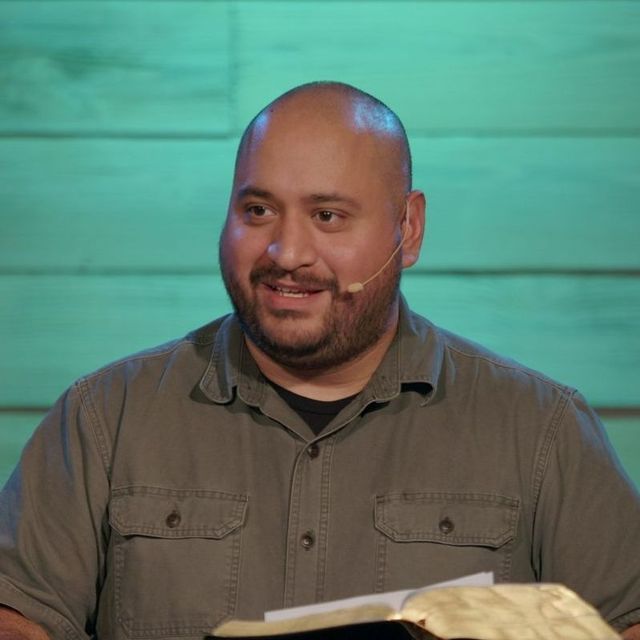
Anthony Alcorta
Missions & Outreach Director
Messiah Bible Church
Related Teachings